MapZot.AI Launches Advanced Traffic Analytics Across Florida
Florida- 25th Sep 2026 - Live and historical traffic intelligence expands visibility across South Florida, Central Florida, North Florida and the Panhandle.
25th Sep 2026 - 2 min read
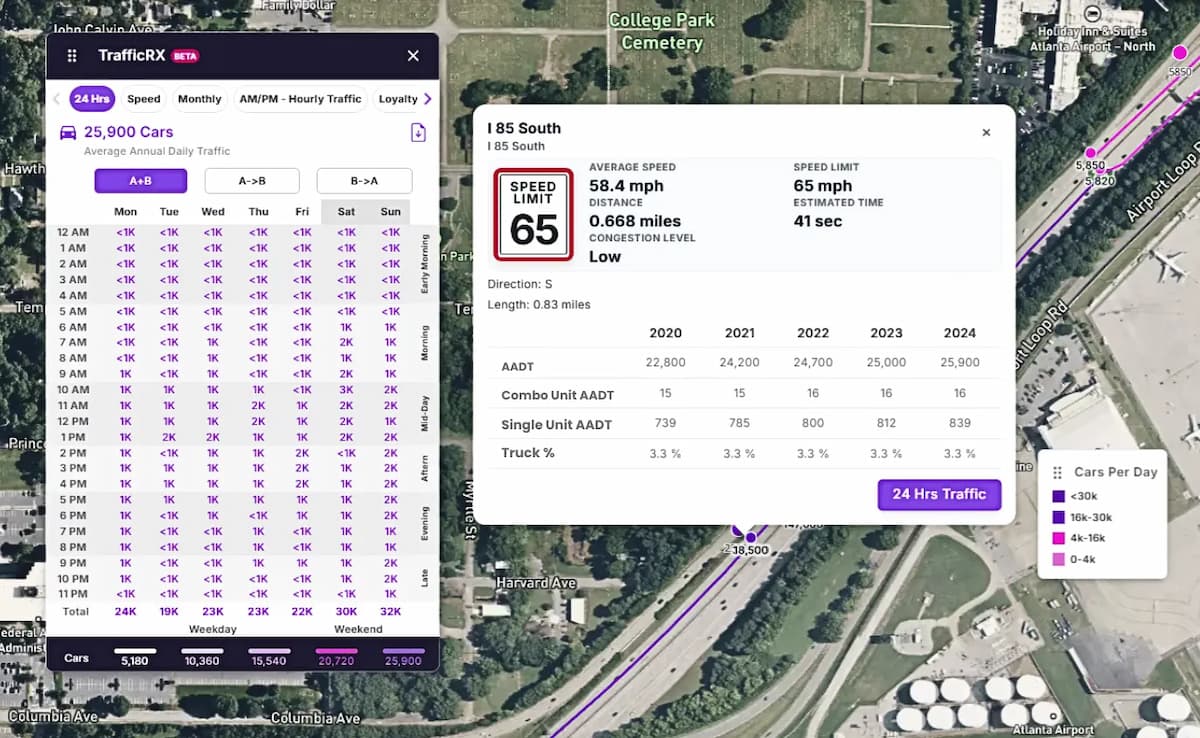
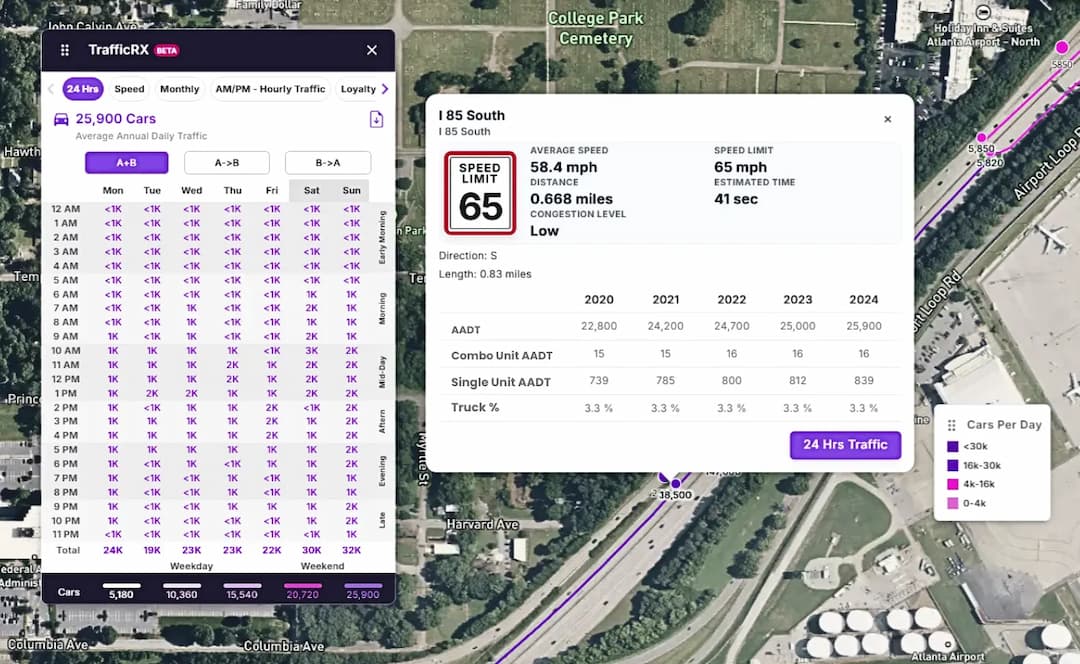
MapZot.AI, an AI-powered location intelligence and market analytics platform, today announced the launch of advanced traffic analytics coverage across Florida, giving businesses, economic-development organizations, real estate professionals, transportation teams and other users access to detailed traffic intelligence across major markets, counties, commercial corridors, intersections and roads.
The new Florida traffic analytics capabilities are designed to help organizations understand how vehicle traffic moves across locations and how those patterns change over time. Available intelligence includes live traffic counts, hourly traffic counts, daily and weekly traffic patterns, monthly trends, AM/PM analysis, directional traffic counts, peak-hour identification, busy-time analysis, traffic hotspots, congestion patterns and changes in traffic behavior over time.
For organizations evaluating a property, commercial corridor, advertising location, restaurant market or development opportunity, traffic is one of the fundamental signals of activity. Yet traffic conditions can vary significantly by hour, day, direction and season. MapZot.AI's traffic intelligence is designed to provide a more detailed view of those patterns so organizations can evaluate locations alongside other demographic, competitive, economic and market data.
From South Florida to the Panhandle
Florida's economic activity is distributed across distinct and rapidly growing markets, making localized traffic intelligence particularly relevant to businesses and organizations evaluating individual corridors and trade areas.
In South Florida, coverage encompasses major markets across Miami-Dade, Broward, Palm Beach and Monroe counties, including Miami, Fort Lauderdale, West Palm Beach, Boca Raton, Hollywood and surrounding communities. Traffic patterns across these markets can provide context for retail locations, restaurants, commercial properties, advertising exposure and transportation planning.
In Central Florida, the platform provides traffic intelligence across major markets including Orlando, Tampa, St. Petersburg and Lakeland, with coverage spanning Orange, Osceola, Seminole, Lake, Polk, Hillsborough and Pinellas counties.
North Florida includes major markets such as Jacksonville, Gainesville, St. Augustine and Ocala, with traffic intelligence spanning Duval, St. Johns, Alachua, Clay and Marion counties.
Across the Florida Panhandle and Northwest Florida, organizations can analyze traffic patterns in markets including Pensacola, Destin, Fort Walton Beach, Panama City and Tallahassee, including key areas of Escambia, Santa Rosa, Okaloosa, Walton, Bay and Leon counties.
The geographic coverage is intended to support analysis at the market and corridor level rather than treating statewide traffic as a single uniform dataset.
What Organizations Can Understand From the Data
The traffic analytics available through MapZot.AI are designed to answer practical questions about how, when and where vehicle activity occurs.
Organizations can examine:
- Live traffic counts to understand current traffic conditions.
- Hourly traffic data to identify changes throughout the day.
- Daily traffic patterns to compare activity across individual days.
- Weekly traffic patterns to identify recurring differences between weekdays and weekends.
- Monthly traffic trends to monitor changes over longer periods.
- AM and PM traffic analysis to understand commuter and daypart activity.
- Directional traffic data to examine movement by direction.
- Peak-hour identification to determine when traffic reaches its highest levels.
- Traffic hotspots to identify areas with concentrated vehicle activity.
- Congestion patterns to understand where and when traffic intensity changes.
- Historical changes to examine how traffic behavior evolves over time.
These datasets can support location evaluation, corridor analysis, market planning, forecasting and broader mobility analytics. They can also help organizations identify potentially inefficient investment decisions when traffic exposure, timing or direction differs from initial assumptions.
Applications Across Business and Infrastructure
For coffee chains, traffic analytics can help teams examine morning traffic, commuter patterns, potential store trade areas and locations where vehicle activity aligns with the operating model of a coffee business.
For QSR and restaurant chains, traffic data can provide another analytical layer for evaluating dayparts, drive-thru opportunities, traffic exposure, expansion markets and competitive locations. Combined with demographic and trade-area information, traffic intelligence can contribute to restaurant site selection and market planning.
For commercial real estate developers, brokers and investors, traffic behavior can provide additional context when evaluating properties, corridors and development opportunities.
Cities and economic-development organizations can use traffic intelligence to examine commercial corridors, activity patterns, development opportunities and potential infrastructure needs. Traffic information can also serve as one input into broader planning and economic-development analysis.
For transportation and traffic organizations, hourly and directional information can help teams study peak periods, movement patterns, congestion and changes in traffic behavior.
OOH and billboard organizations can evaluate traffic exposure, directionality and time-of-day patterns when assessing advertising locations and changing audience opportunities. This makes traffic intelligence relevant to billboard traffic counts and broader OOH planning.
Data-science and analytics teams can incorporate granular traffic information into forecasting, location models, market analysis and decision-support systems.
The information may also be relevant to automotive and mobility ecosystems seeking to understand road utilization, traffic intensity, directional movement and changing mobility behavior. It is intended as analytical information and does not imply that MapZot.AI data directly operates autonomous vehicles.
Traffic as a Location Intelligence Signal
“Traffic is one of the clearest signals of economic activity, but understanding traffic requires more than a single number on a road,” said Shobit Gupta. “Organizations need to understand when traffic occurs, which direction it moves, how patterns differ throughout the week and how those patterns change over time. Making that information more accessible can provide valuable context for decisions involving locations, markets and mobility.”
The Florida launch expands the role of traffic intelligence within MapZot.AI's broader location intelligence platform, where traffic can be considered alongside factors such as demographics, competition, trade areas and other market characteristics.
Rather than relying solely on average traffic volumes, organizations can use multiple traffic dimensions to ask more specific questions: Is a corridor busy during the hours that matter to a particular business? Does traffic move toward or away from a proposed location during peak periods? Are weekday and weekend patterns materially different? Has traffic behavior changed over time?
These questions can be relevant across retail site selection, restaurant site selection, commercial real estate analytics, economic development, transportation planning and OOH advertising.
Availability
MapZot.AI's advanced traffic analytics are now available across Florida markets covered by the platform.
Organizations interested in evaluating Florida traffic data, Florida traffic counts, hourly traffic data, directional traffic data, traffic congestion analytics, OOH traffic data or mobility analytics can use the platform to analyze traffic alongside broader location intelligence and market information.
About MapZot.AI
MapZot.AI is an AI-powered location intelligence and market analytics platform that helps organizations make decisions involving locations, markets, traffic, competition and economic development. The platform brings location-based data and analytical capabilities together to help businesses and organizations evaluate markets, properties, commercial corridors and changing patterns of activity. Its applications span industries including retail, restaurants and QSRs, coffee, commercial real estate, advertising and OOH, automotive, mobility, economic development and other location-driven sectors.