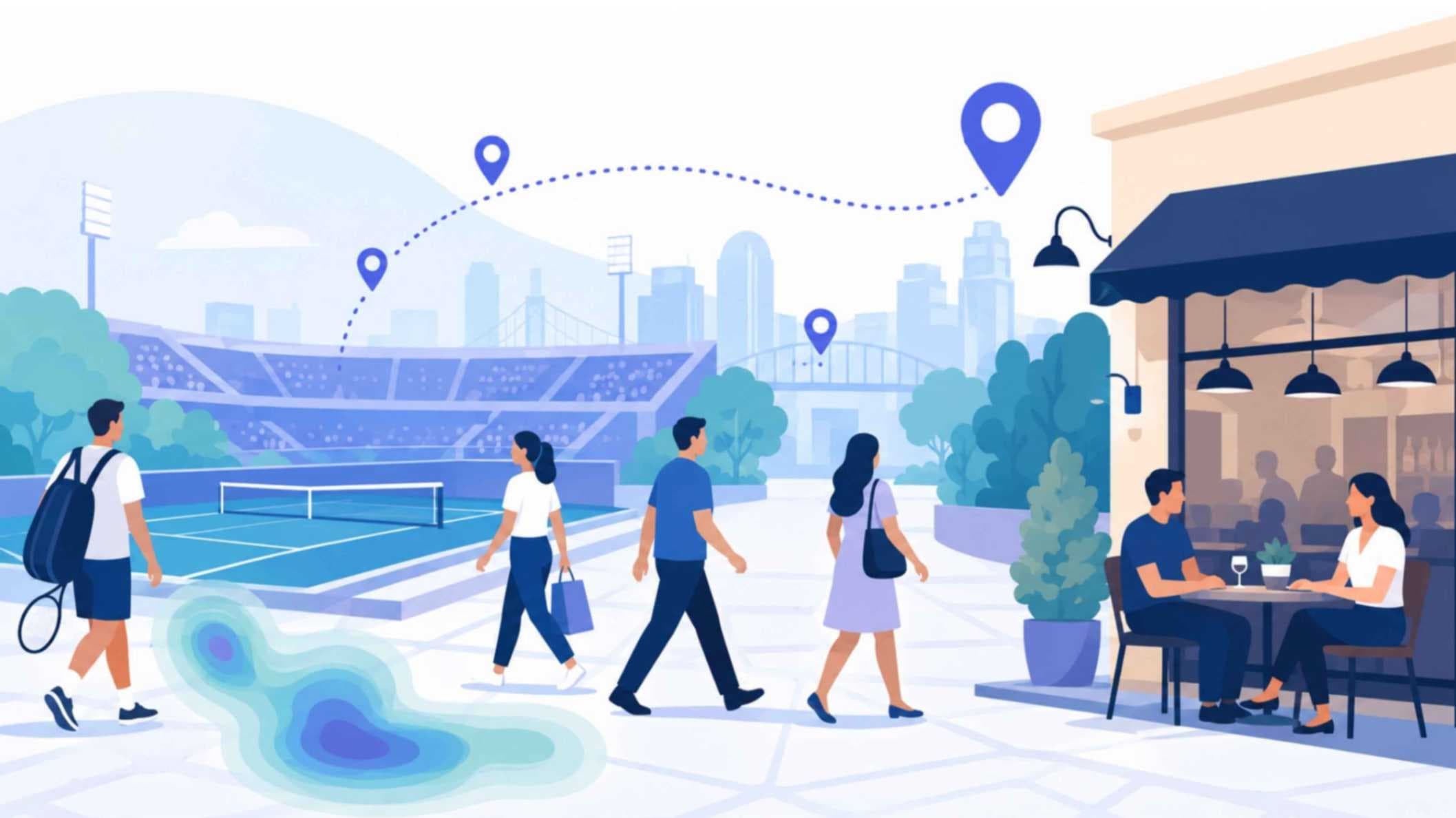
A major sporting event can transform more than the atmosphere inside a stadium. For a few days or weeks, it can reshape where people eat, shop, stay, and spend time, creating a temporary but potentially powerful shift in local consumer behavior.
The 2026 Cincinnati Open offered a clear example.
As the world’s top tennis players arrived in Greater Cincinnati, their activity extended well beyond the Lindner Family Tennis Center. Restaurants, entertainment destinations, retail areas, and other local businesses became part of the tournament experience.
One standout example was Forno Osteria & Bar, an Italian restaurant with locations in Montgomery and Hyde Park. According to restaurant management, tennis players dined there throughout the 2025 tournament, including Jannik Sinner, Carlos Alcaraz, and Jasmine Paolini. During the 2026 tournament, Filipino tennis star Alex Eala was among the players spotted at the restaurant.
But the bigger story isn't simply where tennis stars ate.
It's what their movement tells us about the relationship between major events, mobility patterns, and local business opportunities.
The Cincinnati Open Effect Goes Beyond the Tennis Center
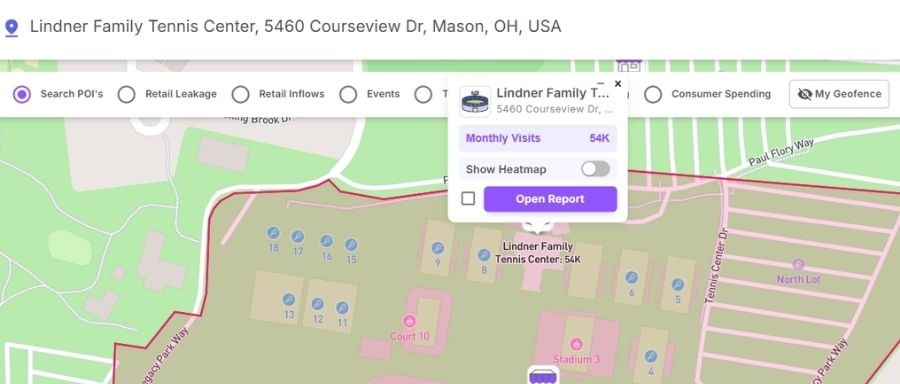
The Cincinnati Open attracted more than 300,000 attendees in 2026, setting a new attendance record for the tournament.
That scale creates a significant economic ripple effect.
Visitors don't spend their entire day inside the venue. They travel to restaurants, hotels, entertainment destinations, shopping areas, coffee shops, and other points of interest before and after matches.
For players, the journey can look different.
Some may prefer to stay close to their accommodations. Others explore the city, visit attractions, meet friends, or look for familiar cuisines while they're on the road.
That creates a fascinating question for businesses:
Where does tournament-driven foot traffic actually go once it leaves the court?
From Tennis Court to Restaurant Table
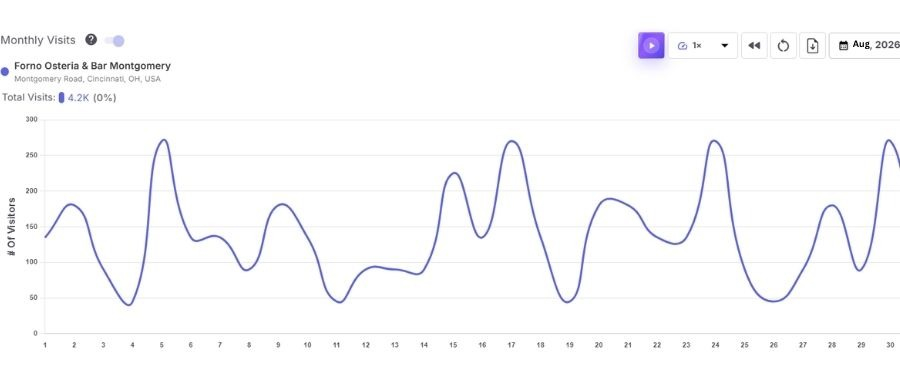
Forno's experience illustrates how a local restaurant can become part of an event ecosystem.
The restaurant's connection with tennis players appears to go beyond convenience. According to its operations director, players developed a relationship with owner Cristian Piesoto, with Italian players in particular seeking out the restaurant because its food reminded them of home.
This highlights an important location-intelligence concept:
Not all event-driven traffic is created equal.
A restaurant may see increased visitation because it is close to a venue. Another may attract visitors because of its cuisine, reputation, accessibility, or proximity to hotels and other destinations.
Understanding why people visit can be just as important as understanding how many people visit.
The Businesses Benefiting From the Player & Fan Journey
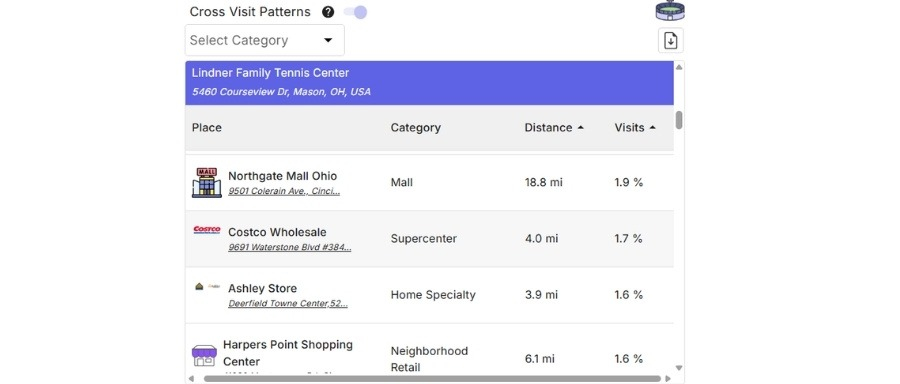
Restaurants aren't the only businesses that can benefit from a major sporting event.
During the Cincinnati Open, players and visitors were also reported visiting destinations such as The Banks and King's Island. Playa Bowls, meanwhile, served more than 13,000 bowls during the previous tournament period, including service to fans and players.
These examples reveal a broader pattern.
A sporting event creates a temporary network of movement:
Tournament Venue → Hotels → Restaurants → Entertainment → Retail → Attractions → Transportation
Each point in that journey represents a potential opportunity for businesses.
And for location-driven businesses, identifying those connections can be incredibly valuable.
Why Event Foot Traffic Matters for Restaurants
For restaurants, sporting events can create several opportunities:
1. Incremental visitation
A large influx of visitors can introduce a restaurant to customers who may not normally live or work nearby.
2. New customer segments
International athletes, visiting teams, affluent travelers, families, and sports fans can create a different visitor mix from the restaurant's typical customer base.
3. Increased demand during specific periods
The impact of an event isn't necessarily evenly distributed. Lunch, dinner, weekends, match days, and post-match periods can all behave differently.
4. Long-term customer acquisition
A visitor who discovers a restaurant during an event may return later—or recommend it to others.
This makes event-driven foot traffic more than a short-term sales opportunity. It can become a customer acquisition channel.
The Bigger Opportunity: Finding Event-Driven Markets
The Cincinnati Open provides one example of a much larger phenomenon.
From the Super Bowl and FIFA World Cup to concerts, festivals, college football games, and major tennis tournaments, large events can temporarily change the movement of people across an entire market.
For businesses, the key question isn't simply:
"How many people attended the event?"
It is:
"Where did those people go before, during, and after the event?"
That distinction is where location intelligence becomes valuable.
Foot traffic data can help businesses analyze visitation patterns, understand where audiences travel, identify popular destinations, and uncover relationships between venues and surrounding businesses. Location intelligence can also combine visitation with demographic and other geographic datasets to provide a more complete picture of a market.
From One Tournament to a Repeatable Strategy
The real opportunity isn't necessarily opening a restaurant next to a tennis tournament.
It's understanding event-driven demand as a repeatable location strategy.
A restaurant brand evaluating a new market could look at areas surrounding sports venues, entertainment districts, convention centers, airports, hotels, and other high-traffic destinations.
A retailer could identify markets where event visitors overlap with its target audience.
A real estate developer could evaluate whether planned developments and major attractions are likely to change future visitation.
And an existing business could analyze whether its location is benefiting from nearby events—or missing out on potential demand.
What the Cincinnati Open Can Teach Businesses
The Cincinnati Open demonstrates how a sporting event can become a citywide consumer journey.
Tennis players may leave the court and head to an Italian restaurant. Fans may explore nearby entertainment districts. Visitors may discover local brands. And businesses that understand these movement patterns can potentially turn temporary traffic into lasting commercial value.
The lesson for location-driven businesses is simple:
Don't just look at where the event happens. Look at where the people go next.
Because sometimes, the biggest business opportunity isn't inside the stadium.
It's somewhere along the journey.