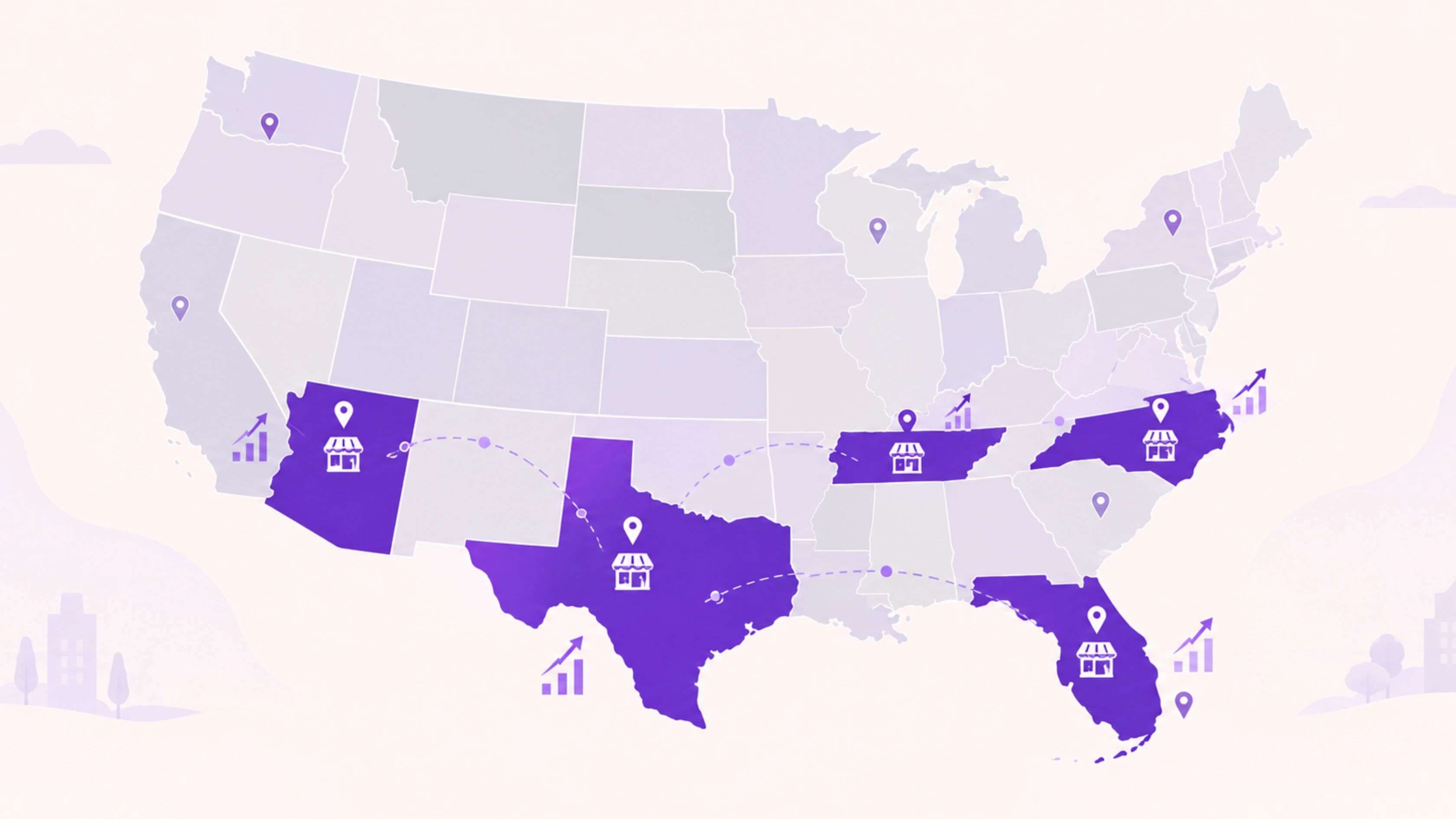
Population growth is changing the U.S. business landscape. From Texas and Florida to Arizona, Tennessee, and North Carolina, these states offer franchise brands new opportunities to reach growing communities, but finding the right location takes more than following migration trends.
When people move, their spending habits, daily routines, and local needs move with them. New residents need places to eat, shop, exercise, access healthcare, and take care of everyday tasks. For businesses and franchise operators, these shifts can create opportunities to serve emerging demand.
That is one reason population growth has become an important consideration in franchise expansion and commercial real estate planning.
According to the U.S. Census Bureau's latest population estimates, Texas added approximately 391,000 residents between July 2024 and July 2025. Florida added nearly 197,000, while North Carolina gained approximately 146,000. Arizona and Tennessee also continued to grow. Source: U.S. Census Bureau
But population growth alone does not guarantee business success. The real opportunity lies in understanding where new residents are settling, what they need, and whether a specific trade area can support another business.
For franchise brands planning their next move in 2026, here are five states worth watching — and what their growth could mean for site selection.
Key Takeaways
Texas: Significant population growth creates opportunities to evaluate expanding suburban markets and growing consumer demand.
Arizona: Growing communities make local demand, competition, and trade-area analysis important for expansion decisions.
Tennessee: Continued population gains offer franchise operators opportunities to investigate emerging residential and commercial corridors.
Florida: Population growth supports continued interest in consumer-facing businesses, but local competition and operating costs matter.
North Carolina: Strong domestic migration makes it a compelling market to investigate for franchise expansion.
The bigger picture: State-level growth can identify promising markets, but neighborhood-level data helps determine where a franchise should actually open.
What Population Migration Means for Franchise Site Selection
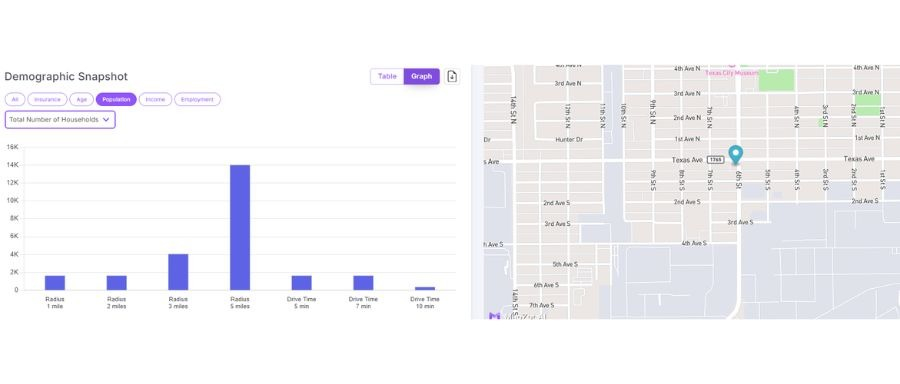
The five states above demonstrate why population movement is worth monitoring. But migration data is only one part of the decision-making process.
A growing state may contain both highly competitive markets and neighborhoods with room for new businesses. Two sites in the same city can also perform very differently depending on their surroundings, accessibility, customer base, and competition.
That is why franchise operators need to connect broad demographic trends with local market intelligence.
1. Identify where demand is developing
Start by evaluating population trends, household growth, income levels, and demographic characteristics. Where possible, supplement historical data with planned residential and commercial development information.
This helps identify markets that align with the franchise's customer profile.
2. Understand the competitive landscape
Map existing franchise locations, independent competitors, and complementary businesses. Assess whether a prospective location would serve an underserved trade area or enter an already saturated market.
Competitor counts alone are not enough. Their proximity, category, customer appeal, and surrounding conditions all matter.
3. Analyze the trade area
A trade area represents the geographic area from which a business draws customers. Its size and shape depend on the business category, travel patterns, barriers, and the availability of alternatives.
Instead of relying only on city or ZIP code boundaries, franchise brands can examine customer travel patterns, drive times, nearby destinations, and mobility insights to better understand how a location fits into the wider market.
4. Evaluate individual sites
Once a market has been shortlisted, assess the individual properties.
Consider visibility, road access, traffic patterns, nearby businesses, site characteristics, and the presence of the target audience. Where reliable data is available, use historical performance from comparable locations to inform revenue forecasts.
A promising market does not make every property within it a strong investment.
5. Plan for the wider network
For multi-unit franchise operators, expansion decisions should account for existing and planned locations. Opening a new store too close to an established one can create sales cannibalization, while overlooking an emerging market can leave potential demand unserved.
Mapping the full network and evaluating overlap between trade areas can help brands build a more sustainable expansion plan.
How Location Intelligence Can Support Franchise Growth
Franchise expansion requires more than a list of fast-growing states. Teams need to understand the relationship between people, places, competition, and consumer activity.
Location intelligence brings these factors together to support more informed decisions.
With tools such as MapZot.AI, franchise brands, brokers, and real estate teams can use location-based insights to evaluate potential markets, compare sites, understand surrounding businesses, and assess trade areas.
Depending on the available data and analysis, this can support several stages of expansion:
Market screening: Identify cities and neighborhoods that fit a brand's expansion criteria.Trade-area analysis: Understand the demographics, businesses, and activity surrounding a potential location.
Competitive intelligence: Evaluate nearby competitors and existing franchise coverage.
Site comparison: Compare shortlisted properties against consistent criteria.
Network planning: Assess geographic overlap and potential cannibalization between locations.
Revenue forecasting: Estimate potential site performance using relevant market and location variables.
These insights do not eliminate investment risk or guarantee a successful opening. They help teams evaluate opportunities more systematically and make decisions using more than population growth alone.
The Bottom Line: Follow the People, Then Find the Right Location
Texas, Arizona, Tennessee, Florida, and North Carolina offer franchise operators compelling reasons to examine their markets more closely. Their population trends can help guide early research, reveal potential areas of interest, and inform long-term expansion planning.
But the next successful franchise location will not necessarily be in the fastest-growing state. It will be in a market where customer demand, competition, accessibility, real estate conditions, and the brand's business model align.
For franchise brands planning their next stage of growth, the opportunity is to connect the big picture with the details on the ground.
MapZot.AI helps businesses turn location data into actionable market and site-selection insights so expansion teams can evaluate opportunities with greater clarity and confidence.
Explore MapZot.AI to learn more about location intelligence for smarter site selection and market planning.