Out-of-home (OOH) advertising has always had one big challenge: proving it works. A billboard on a busy road feels powerful, but for years marketers had little more than “estimated impressions” to justify the spend.
In 2026, that has changed. With location intelligence, mobility data, and AI-driven analysis, OOH is now one of the most measurable channels in the media mix. Here is why OOH is gaining ground, how its effectiveness is being measured, and what marketers should do to get more from every placement.
Why Out-of-Home Advertising Still Matters in 2026
As digital channels get more crowded and costly, OOH offers something increasingly rare: a large, real-world audience that cannot skip, block, or scroll past an ad.
Several trends are driving renewed interest:
Rising digital ad fatigue. Consumers are saturated with online ads, and ad blockers and privacy changes keep shrinking addressable reach.
People are out and about. Commuting, shopping, dining, and events keep audiences moving through the physical world, where OOH meets them.
Digital OOH (DOOH) has matured. Programmatic buying, dynamic creative, and real-time triggers make OOH far more flexible than the static billboard of the past.
Better measurement. Location data now links ad exposure to real-world behavior.
How Is OOH Advertising Effectiveness Measured?
Traditional OOH measurement relied on traffic counts and generic audience estimates. These numbers show how many people could have seen an ad, not what they did afterward.
Modern measurement looks at behavior. The most useful metrics fall into three groups.
1. Reach and Exposure
Who actually passed by the placement, and when? Mobility data shows the volume of devices near a billboard or transit display, along with the time of day, day of week, and dwell patterns.
2. Audience Quality
Not all impressions are equal. Understanding the demographics, interests, and trade areas of the people who pass a location helps you decide whether a placement matches your target customer.
3. Real-World Outcomes
This is where the biggest shift has happened. Marketers can now compare visits to stores, restaurants, dealerships, or venues among people exposed to an ad against a control group that was not. This is often called OOH attribution or foot traffic lift.
Foot Traffic Lift: Turning Impressions into Visits
Foot traffic lift is one of the most practical ways to evaluate OOH effectiveness. The idea is simple:
Identify devices exposed to an OOH placement during the campaign. Compare their visits to the advertised location with a similar unexposed group. Measure the difference.
A positive lift shows that the campaign drove incremental visits, not just awareness. It also lets you compare placements, formats, and markets, so you can learn which locations deliver real results and which only look good on paper.
What Makes an OOH Campaign Effective?
Measurement is only useful if it improves decisions. These factors consistently separate high-performing OOH campaigns from the rest.
Location relevance. The best placements sit on the routes and in the trade areas where your customers actually travel, not simply where traffic is heaviest. A smaller audience that matches your customer profile often beats a larger, generic one.
Proximity to the point of purchase. Ads closer to the store or service, or along the path to it, tend to convert more easily because the message arrives when the decision is near.
Timing and context. Dayparting, weather triggers, events, and seasonal patterns all affect response. DOOH makes it possible to change creative to match the moment.
Creative built for glances. OOH is a fast medium. Strong campaigns use a clear message, bold visuals, and one simple call to action.
Integration with other channels. OOH works best alongside mobile, social, and search. Exposed audiences often show higher search and engagement activity, which makes OOH a strong top-of-funnel driver.
How Location Intelligence Improves OOH Planning
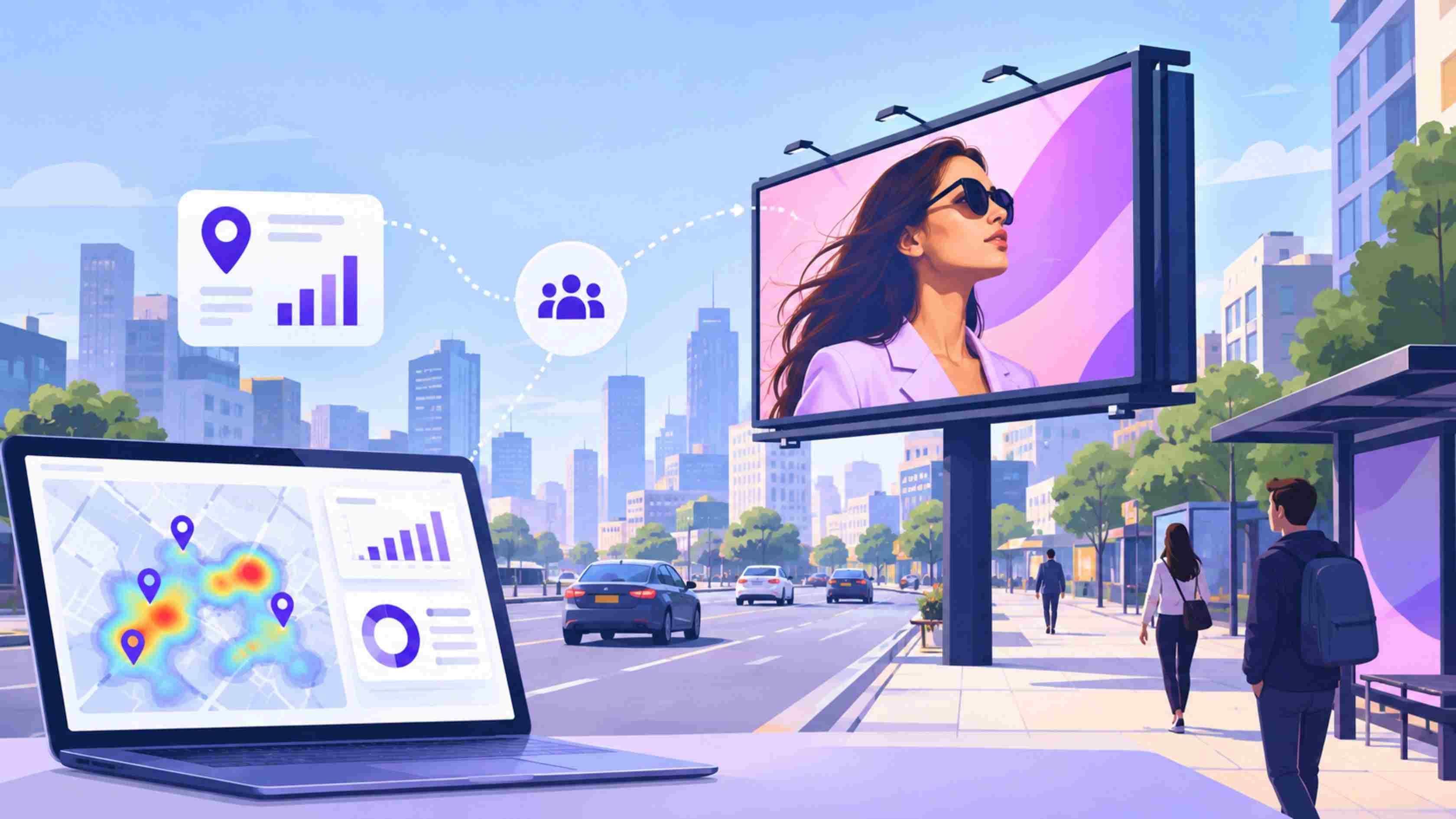
Planning OOH with intuition alone can leave money on the table. Location intelligence platforms like MapZot.AI help marketers go further by:
Mapping audience movement to find the corridors, neighborhoods, and venues that matter most to your brand.
Comparing placements on audience composition, visit patterns, and proximity to your locations. Understanding trade areas to see where your customers come from and where to reach more of them.
Benchmarking performance across markets so each rupee or dollar goes where it earns the most.
Measuring results after launch with visit-based insights rather than estimated impressions.
The outcome is a more confident, data-backed approach to buying, optimizing, and justifying OOH.